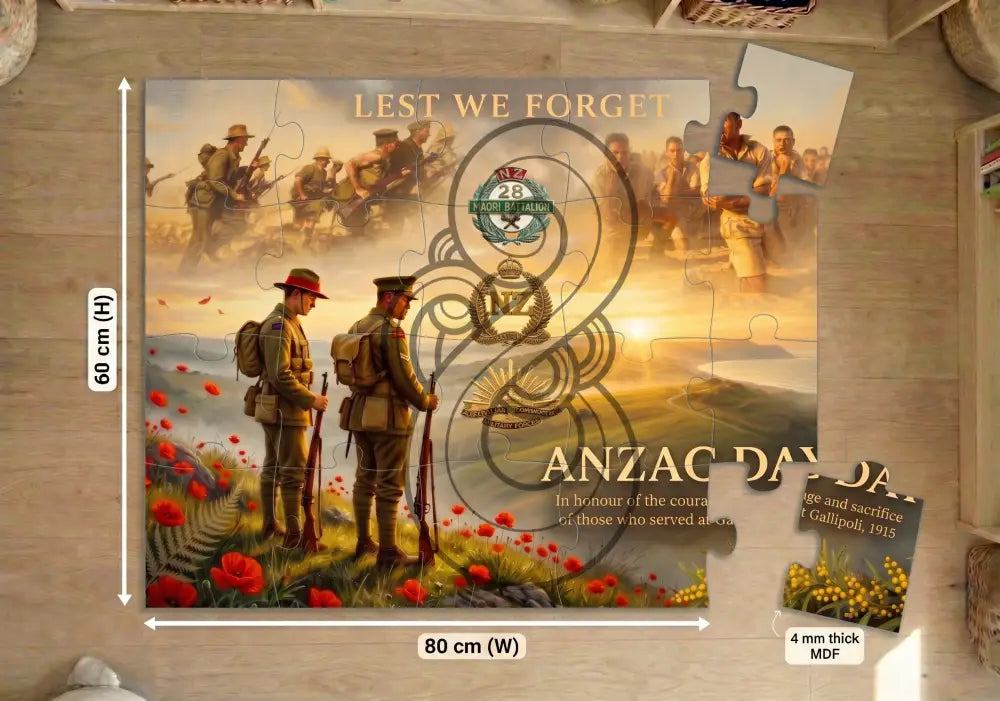
On 25 April 1915, soldiers of the Australian and New Zealand Army Corps (ANZAC) landed on the shores of Gallipoli in one of the most significant campaigns of World War I. Facing steep terrain and fierce resistance, their courage, endurance, and sacrifice became a defining part of both nations’ histories.
The ANZAC legacy is remembered not only for the hardships endured, but for the unbreakable spirit and comradeship shown in the face of adversity.
The red poppy has become a lasting symbol of remembrance, inspired by the flowers that grew across the battlefields after the war. It represents both the sacrifice of those who served and the hope that followed.
To the left, the silver fern represents New Zealand — a symbol of strength, resilience, and identity.
To the right, the golden wattle represents Australia — a symbol of unity and remembrance.
Together, these national emblems stand in honour of a shared sacrifice.
Also remembered is the 28th Māori Battalion, whose bravery and mana became legendary. Their contribution remains a powerful symbol of courage, culture, and commitment to service.
Lest we forget.